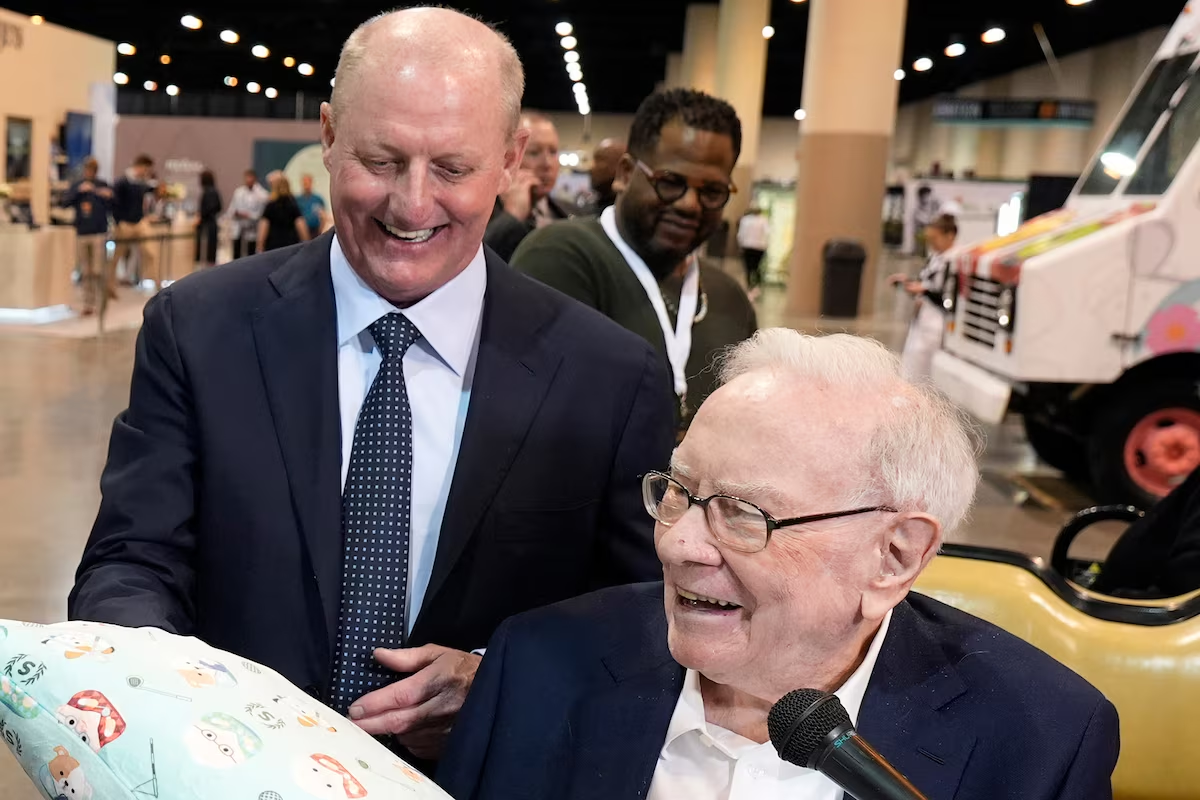
For generations of investors, Warren Buffett became synonymous with Berkshire Hathaway. His disciplined investment philosophy, long-term perspective, and ability to identify exceptional businesses transformed the company into one of the world’s most valuable corporations.
Now, Berkshire Hathaway is entering a chapter unlike any in its history.
For the first time in decades, investors are looking beyond Buffett himself and asking a different question:
What comes next?
The End of an Extraordinary Era
Few business leaders have influenced global investing as profoundly as Warren Buffett.
Over more than fifty years, Berkshire Hathaway evolved from a struggling textile manufacturer into a diversified conglomerate with interests spanning insurance, railroads, utilities, manufacturing, consumer goods, technology, and financial services.
Buffett’s investment philosophy emphasized patience, disciplined capital allocation, and long-term value creation instead of short-term market speculation.
His approach became a model studied by investors around the world.
Berkshire Was Built to Last
Although Buffett became the public face of Berkshire Hathaway, the company was never designed around one individual alone.
Its decentralized management structure allows dozens of independently operated businesses to make their own decisions while benefiting from Berkshire’s financial strength and long-term ownership model.
This structure has helped Berkshire remain stable through economic downturns, financial crises, and changing market conditions.
Many analysts believe this organizational model will remain one of the company’s greatest strengths moving forward.
A New Leadership Chapter
Leadership transitions always attract attention—especially at companies with global influence.
The next generation of Berkshire executives inherits an organization with enormous financial resources, a diverse collection of businesses, and exceptionally high expectations.
Rather than dramatically changing direction, investors expect leadership to preserve many of the principles that have guided Berkshire for decades while adapting to an evolving global economy.
The challenge is not replacing Buffett’s personality.
It is maintaining Berkshire’s culture.
Capital Allocation Remains the Key
One of Berkshire Hathaway’s greatest competitive advantages has always been disciplined capital allocation.
The company has consistently invested with a long-term perspective, avoiding unnecessary risks while maintaining significant financial flexibility.
Future investment decisions will likely receive greater scrutiny than ever before.
Whether Berkshire pursues acquisitions, expands existing businesses, increases share repurchases, or invests in emerging industries, every major move will be closely watched by financial markets.
Investing in a Different Economy
Today’s investment landscape differs dramatically from the one Buffett entered decades ago.
Artificial intelligence, cloud computing, renewable energy, advanced manufacturing, biotechnology, and digital infrastructure are reshaping industries at remarkable speed.
Future leaders must evaluate opportunities in sectors where innovation moves far faster than traditional industrial businesses.
The challenge will be balancing Berkshire’s conservative investment philosophy with opportunities created by rapidly changing technology.
Confidence Beyond One Person
Many investors recognize that Berkshire Hathaway’s success was built on more than remarkable stock selection.
Its financial discipline, conservative balance sheet, decentralized management model, and focus on long-term ownership have become deeply embedded within the organization.
These principles are expected to continue guiding decision-making even as leadership evolves.
For shareholders, continuity may prove just as valuable as change.
Markets Will Watch Every Decision
Large acquisitions, portfolio adjustments, and capital deployment strategies are likely to receive increased attention during Berkshire’s next phase.
Every quarterly report, annual meeting, and shareholder letter will be carefully analyzed for signals about the company’s long-term direction.
Such attention reflects Berkshire’s unique position within global financial markets.
Few companies command similar levels of investor interest.
Looking Ahead
The story of After Buffett is not simply about succession.
It is about whether one of the world’s most respected investment organizations can continue applying timeless principles in a rapidly changing world.
Berkshire Hathaway enters this new era with substantial financial strength, experienced leadership, and a culture built over generations.
The company now faces a different challenge—not preserving history, but writing its next chapter.
The investment world will continue watching closely.
Not because Berkshire Hathaway has lost its legendary leader, but because it now has the opportunity to demonstrate that its greatest legacy was never one person—it was a philosophy designed to endure.